

Minimalist Montessori Design for Kids: A Practical Guide for Indian Parents
Transform your child's space with Minimalist Montessori Design! 🌟 Practical tips for Indian parents to foster independence and creativity. #MinimalistMontessori #IndianParenting"
ACITIVITIES
GranthJain
10/11/20252 min read
Introduction: Why Minimalist Montessori Design Works for Indian Homes
As Indian parents, we often strive to create a nurturing and inspiring environment for our children. A minimalist Montessori design perfectly balances simplicity with functionality, offering a clutter-free, calming space that encourages independence and creativity. This guide explores how to design a Montessori-inspired room for kids, tailored to Indian sensibilities and lifestyles.
What is Minimalist Montessori Design?
Minimalist Montessori design combines the principles of Montessori education—independence, simplicity, and accessibility—with the aesthetics of minimalism. The result is a space that fosters learning and exploration while staying organized and visually appealing.
Key Elements of Minimalist Montessori Design
Open Space for Movement
Keep the room clutter-free to allow your child ample space for physical activities.
Open areas encourage the development of both fine and gross motor skills.
Natural Materials and Neutral Colors
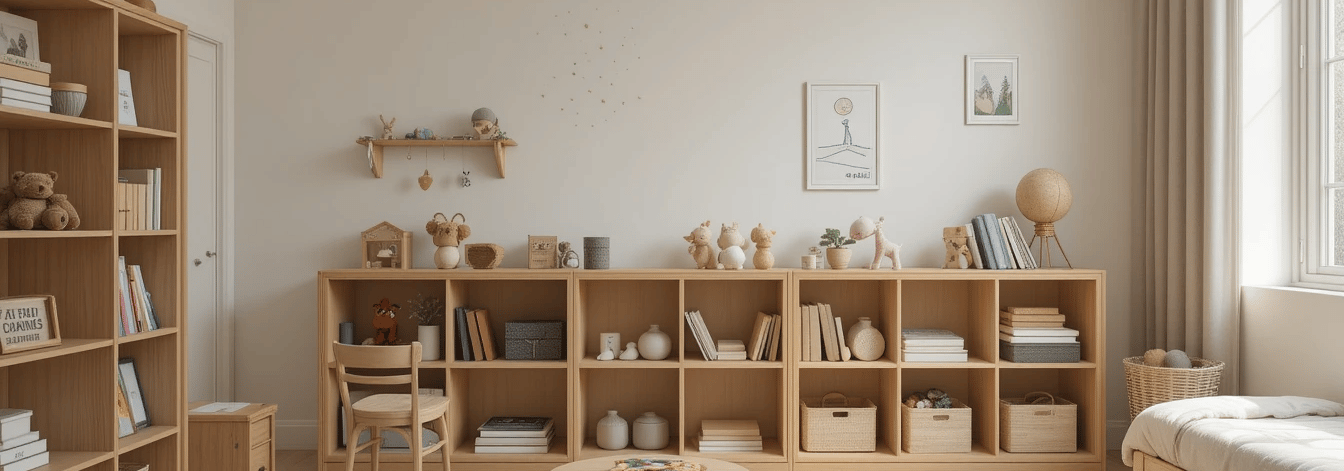
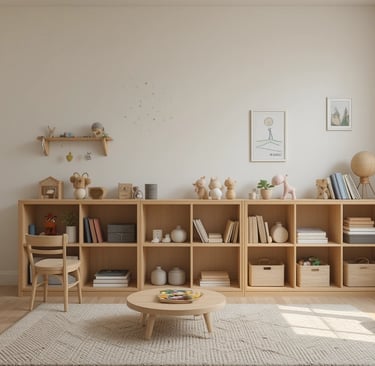
Use wooden furniture and toys made from natural materials to connect children with nature.
Opt for neutral tones like beige, white, or pastel shades to create a calm environment that reduces overstimulation.
Child-Sized Furniture
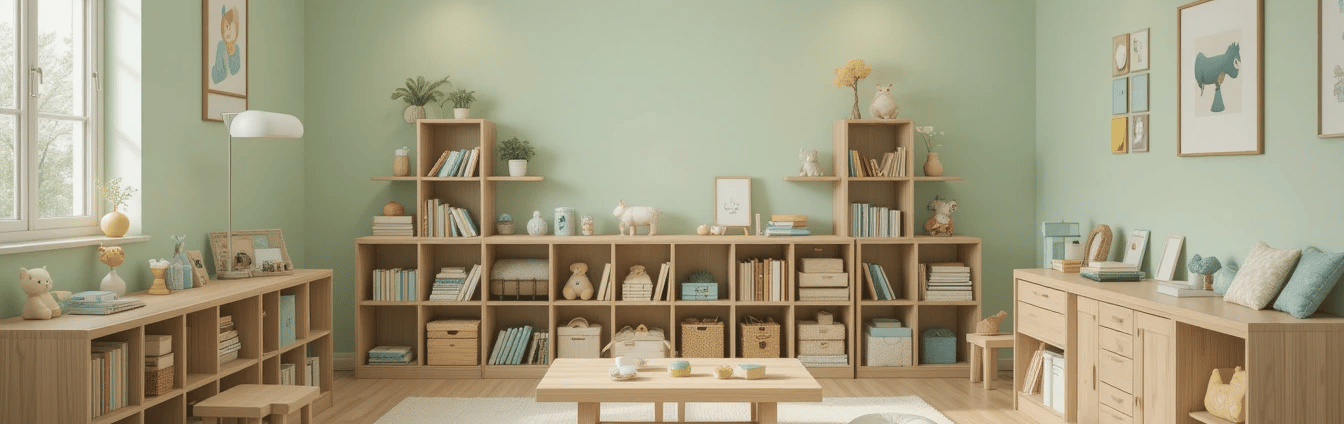
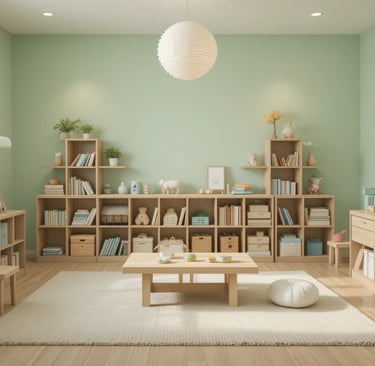
Incorporate low shelves, tables, and chairs that are accessible to your child.
This empowers them to make independent choices about their activities, fostering confidence and responsibility.
Toy Rotation System
Limit the number of toys available at any given time and rotate them periodically.
This approach promotes deeper engagement with each toy while reducing clutter.
Functional Decor
Use handmade artwork or your child’s creations as decor items instead of generic wall art.
Include functional pieces like sensory tables or art easels that encourage hands-on learning.
Blending Minimalism with Indian Culture
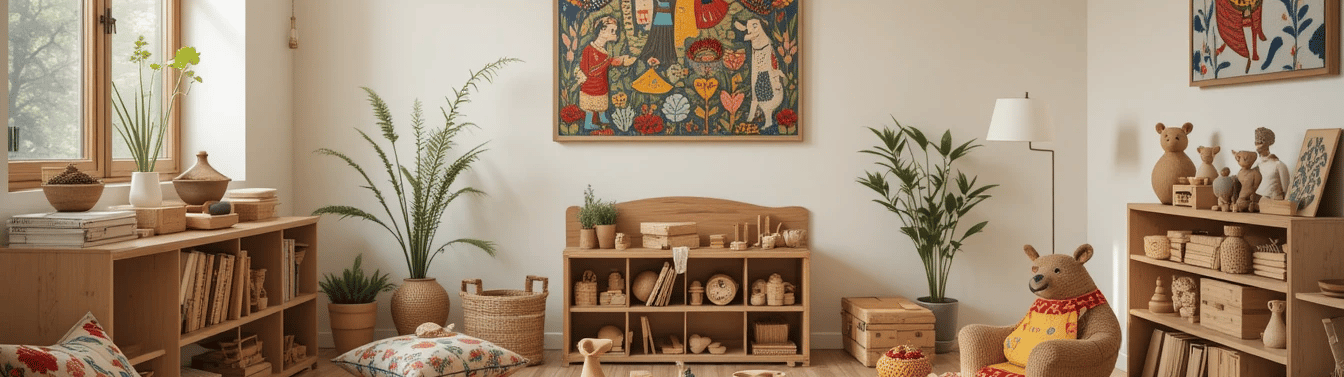
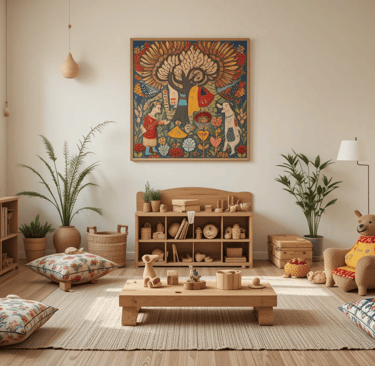
Traditional Textiles: Use block-printed rugs or Kantha quilts as soft furnishings to add warmth while celebrating Indian craftsmanship.
Handcrafted Toys: Incorporate wooden or terracotta toys made by local artisans to blend tradition with functionality.
Cultural Artwork: Decorate walls with simple Warli or Madhubani art that aligns with the minimalist aesthetic while introducing cultural elements.
Steps to Create a Minimalist Montessori Room
Declutter the Space
Remove unnecessary items to create an open layout that encourages movement and exploration.Choose Neutral Colors
Paint walls in soft shades like white or pastel green and use neutral-toned furnishings for a cohesive look.Incorporate Natural Materials
Opt for wooden furniture, bamboo baskets, or cotton textiles to create an eco-friendly environment.Organize Toys and Books
Use low shelves to arrange toys and books neatly so your child can access them independently.Add Functional Decor
Include sensory boards, chalkboards, or wall-mounted organizers that double as decor while serving a purpose.
Conclusion: A Space That Grows With Your Child
A minimalist Montessori design is more than just an aesthetic choice; it’s a way of fostering independence, creativity, and emotional well-being in your child’s early years. For Indian parents, blending this approach with cultural elements creates a unique space that reflects family values while supporting holistic development.
Start designing your child’s minimalist Montessori-inspired room today—a space where they can thrive while staying connected to their roots!